
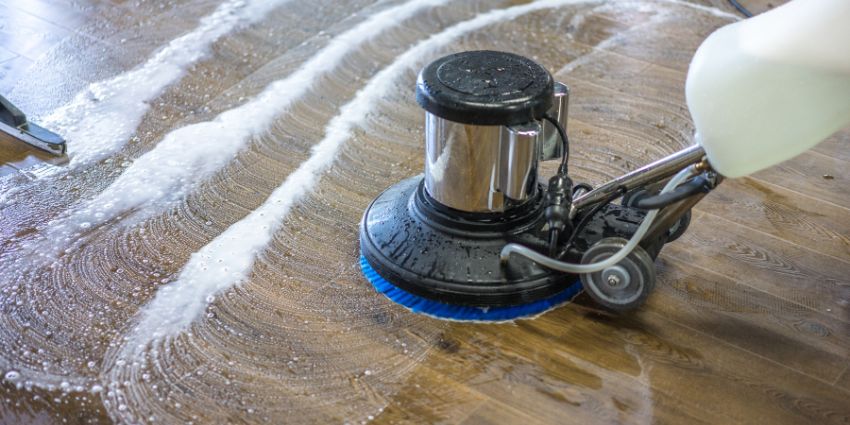
Floor care scheduling breaks when drying times, crew sequencing, and building access windows aren't built into the plan — crews overlap, zones reopen too early, and you eat rework or tenant complaints. Coordinating labor-intensive strip, wax, and refinish work without conflicts means phasing zones, baking cure-time buffers into the schedule, and keeping every stakeholder on the same live timeline. The coordination is the job as much as the chemistry.
I've scheduled enough overnight floor care to know the failure mode: the strip crew finishes zone A, the wax crew moves in before the floor is actually ready, and by morning you've got footprints through a half-cured finish and a property manager who wants to know why the lobby wasn't open at 6. The work wasn't bad. The schedule didn't respect dry time. That's what floor care scheduling and dispatch has to solve — not just who shows up, but when each phase can start and when the building can safely reopen.
Why Drying Times Create Scheduling Challenges
Floor care involves multiple coating layers, each with specific drying and curing requirements. Commercial buildings offer limited access windows — usually off-peak hours — which compresses already tight timelines. Labor concentrates in short bursts, and foot traffic plus equipment use adds safety constraints that the schedule has to account for.
Miss any of these variables and you get conflicts: crews waiting on cure time, zones blocked longer than promised, or finishes damaged because someone walked through too soon.
The Cost of Poorly Managed Downtime
Poorly managed downtime extends closures in high-traffic areas, inconveniences tenants, and drives up labor costs from idle crews or overtime. Clients expect seamless delivery with minimal operational impact. When reopening windows slip, trust erodes and renewals get harder.
Coordinating Labor-Intensive Floor Care Without Conflicts
Practical coordination strategies that keep floor care on track:
- Phased scheduling: Stagger work zones and crews so no single area gets overwhelmed and progress stays continuous.
- Dry-time buffers: Build cure times directly into the schedule — not as a footnote, as a hard block before the next crew or reopening.
- Crew sequencing: Assign teams based on task dependencies so strip, neutralize, wax, and buff flow without gaps or collisions.
- Access window planning: Align work with off-hours and low-traffic periods the building can actually support.
- Real-time adjustments: When humidity, equipment issues, or delays hit, flex the schedule immediately — don't wait until morning.
- Clear communication: Keep property managers, building engineers, and crews on the same timeline with proactive updates when conditions change.
How Modern Scheduling Tools Reduce Downtime Risks
Centralized scheduling ties labor assignments to drying phases so everyone sees the same plan. Automated alerts flag task completion and dry-time milestones before the next crew moves in. Visual timelines give managers and clients a clear read on progress. Completion documentation confirms spaces are safe to reopen — not just "looks dry," but verified ready.
Flooring software built for commercial floor care puts these pieces in one system instead of a spreadsheet and three group texts.
Best Practices for Facility and Floor Care Teams
- Conduct pre-job walkthroughs to map traffic patterns and identify constraints before you lock the schedule.
- Document standard drying times by floor type and product so buffers are realistic, not hopeful.
- Train crews on timing discipline and communication — everyone needs to know what "ready for next phase" actually means.
- Review past jobs to refine future schedules. Every overrun teaches you something about cure time or access windows.
What Property Managers Expect During Floor Care Projects
Property managers want minimal disruption, clear reopening windows, verified completion before reoccupation, and proactive updates when anything shifts. Hit those four and the relationship holds. Miss one and you're explaining yourself in a renewal meeting.
Frequently Asked Questions
Why do floor care projects create scheduling conflicts?
Strip, wax, and refinish work requires sequential phases with mandatory drying times. When schedules ignore cure windows or double-book crews across dependent tasks, conflicts and rework follow.
How do you build dry-time buffers into a floor care schedule?
Block cure periods as non-negotiable holds between phases. The wax crew shouldn't be assignable until the strip-and-neutralize window closes — and reopening shouldn't be scheduled until the final coat has cured per product specs.
What's phased scheduling for floor care?
Breaking a building into zones worked on a staggered timeline so one area can cure while another is in progress. This spreads labor, limits total closure time, and prevents every crew from colliding in the same hallway.
Can scheduling software handle floor care cure times?
Yes. Modern tools let you sequence crews, set phase dependencies, and alert teams when dry-time milestones pass — so the next step starts on time, not too early.
How do you communicate floor care timelines to property managers?
Share a visual schedule with zone-by-zone reopening windows upfront, then push proactive updates when cure times extend or conditions change. Surprises kill trust faster than a late finish.
Conclusion
Labor-intensive floor care succeeds on coordination, not just manpower. Phased scheduling, dry-time buffers, and live communication eliminate the conflicts that turn a good strip-and-wax into a tenant complaint. Pair structured scheduling with smart crew management — see avoiding flooring project delays with smart crew management — when install and maintenance crews share the same calendar.