
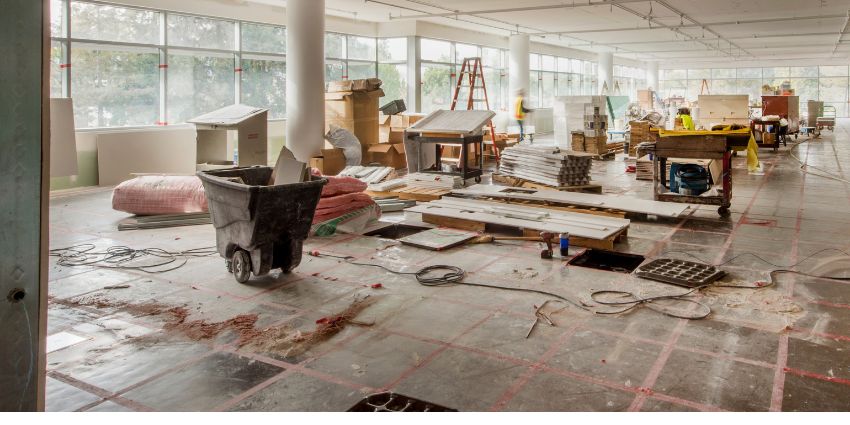
False damage claims happen when a client blames your crew for damage you didn't cause — and without a record, it's your word against theirs. Photo proof stops them cold: time-stamped, location-tagged before-and-after photos captured as the work happens. When a claim surfaces days later, you pull the image and the dispute ends in seconds.
I've run commercial cleaning crews for 13 years. The disputes I lost weren't the ones where we did bad work — they were the ones where I couldn't prove we did good work. I had a client once who was convinced our tech never showed up that night. Except he had — and I pulled up the GPS-tagged photos of his punch-in and punch-out, on site, time-stamped. Conversation over. The same evidence that proves a tech was there proves what condition you left the place in — which is exactly what kills a false damage claim.
Why False Damage Claims Are So Common
Several factors drive false damage claims in commercial cleaning and facility services. Multiple vendors work in the same space, so when something breaks, the most recent crew often gets blamed — even when the damage was already there. Without a baseline record at check-in, you can't show what the site looked like before your team touched it.
Claims often arrive days later. By then the scene has changed, witnesses forget details, and your crew has moved on. You need a clear, dated record of conditions before and after service — not a scramble through texts and memory when a property manager calls angry.
The Real Cost of Damage Disputes
False damage claims hit your cash flow first. Clients withhold payment while they investigate. You spend hours on calls and emails instead of running routes. Repeat disputes can push up insurance claims and premiums.
Trust takes the longest hit. One bad dispute can sour a property manager relationship you spent years building. The fix is prevention: documented proof at the job, ready before anyone asks for it.
How ProTeams' Photo-Proof Stops False Claims Cold
ProTeams gives you structured visual proof tied to each job. Here's how it works for your operation:
- Before & After Photos: Capture conditions before and after each task. A dedicated cleaning inspection app lets your field teams log baselines from the job site.
- Time-Stamped Images: Every photo is stamped automatically. That timestamp is your defense when a false damage claim shows up a week later.
- Task-Linked Proof: Photos attach to specific tasks, not a random camera roll. Build photo requirements into a standardized janitorial inspection checklist so crews don't skip high-risk areas.
- Location Verification: Each image confirms where it was taken — so you can prove your crew was on the right floor, in the right building, at the right time.
- Centralized Records: All proof lives in one searchable system. No digging through email threads when a client disputes a charge.
- Instant Retrieval: Pull the record in seconds. The conversation shifts from "he said, she said" to what the photos show.
Photo proof turns a false damage claim from a negotiation into a lookup. You show the record. The dispute usually ends there.
Liability & Trust Benefits for Service Providers
Structured photo proof speeds up invoice approval. Property managers see what you saw on site. Clear evidence cuts down on insurance back-and-forth and protects crews who did the work correctly.
Your team gets credit for showing up and doing the job. Clients renew contracts when they trust your documentation. Referrals follow when disputes don't spiral.
Best Practices for Using Photo-Proof Effectively
Get the most from photo proof on every account:
- Define when photos are required: Set rules for check-in, mid-task, and sign-off photos on every job type.
- Standardize angles and coverage areas: Same angles every visit make before-and-after comparisons obvious.
- Train crews on consistency and accuracy: Short, regular training beats one big onboarding session.
- Review photo logs regularly: Build reviews into QC. Our guide to a commercial cleaning audit checklist walks through running those assessments.
What Property Managers Expect in 2026
Property managers expect visual proof of condition and task completion — not verbal assurances. Moving to proof of service software gives you the audit trail and fast, fact-based dispute resolution they want on every contract.
Frequently Asked Questions
What is a false damage claim in commercial cleaning?
A false damage claim is when a client attributes pre-existing or third-party damage to your crew — often reported days later, once the scene has changed and there's no baseline record. With multiple vendors in one space, the most recent provider usually gets blamed.
How does photo proof prevent false damage claims?
Photo proof captures time-stamped, location-tagged before-and-after images as the work happens. When a claim surfaces, you have an objective record of the property's condition at the time of service — shifting the dispute from opinion to evidence.
Are time-stamped photos enough to resolve a damage dispute?
In most cases, yes. A photo tagged with the date, time, and location of service establishes the condition you left the site in. That record typically ends the dispute before it escalates to withheld payment or an insurance claim.
What should cleaning crews photograph, and when?
Standardize before-and-after photos of high-risk and high-visibility areas, taken at check-in and task completion. Consistent angles and coverage make images comparable and defensible.
Does photo proof protect my cleaners, not just my business?
Yes. Most of the time the record vindicates the crew — it protects diligent cleaners from being wrongly accused as much as it protects the company from false claims.
Conclusion
Photo proof is baseline protection for cleaning companies facing false damage claims. ProTeams turns field documentation into a liability shield you can pull up on demand. Pair it with GPS-verified check-ins — see our guide to GPS proof of service — so presence and condition are both on record before a client pushes back.